Wednesday, 19 September 2012

Festivals To See Before You Die

Being a Brit I am ashamed to say that I have never been to a festival. In England, putting your wellies on, buying a crate of Fosters, and attending one of the annual summer music festivals, is a thing a lot of us youngsters look forward to. Tickets for these events go on sale months in advance, and come the month of May, as the weather gets warmer (well kind-of), a sort of festival frenzy takes over the nation.  You could say it's a coming-of-age thing I guess.
So because of this I am determined to up my game and buy my 2013 festival ticket. Even though I'll be a 22-year-old festival virgin, and will feel far too old and uncool, I don't want to miss out on a thing which you should experience once in your life-time. 
There are so many amazing festivals out there, all celebrating a collection of things, and all over the world. So I've decided to write a collection of festivals I don't want to miss out on before I die. Hopefully, once I've raved it up at a festival on my home turf, I'll travel further afield and see what the rest of the world has to offer. 
Glastonbury, England
Frequently heralded as the finest music festival in the world, Glastonbury always attracts the biggest-named bands. However, in addition to the great music line-up, this festival is most famous for it's groovy vibe. So as well as listening to great sounds, this is the perfect place to get in touch with your free-spirited, tree-hugging side. I'll hopefully be going next year!
Full Moon Party, Ko Pha Ngan 
Dubbed as the giant rave, every month travelers flock to the island to listen to techno music, drink out of buckets, smother themselves in UV body paint, and party the night away. Expect a night of good-natured, booze-filled and drug-fueled mayhem. 
The Festival of San Fermin
Most famously known as the Pamplona Bull Run, this festival begins at midday on the 6th July every year with the 'chupinazo' which takes place on the balcony of the Casa Consistorial. Thousands of people congregate in the square awaiting the mayor's official announcement that the fiestas have begun. With all those bulls running about, this 'Festival of the Brave' is not for the faint-hearted. 
Festival of Lathmar Holi
This is a festival which celebrates colorThe event involves thousands of men and women showering themselves in an array of rainbow colored powders and flower petals. The festival is celebrated throughout India and the legend behind it claims that it is closely associated with Lord Krishna and his principle consort and childhood friend, Radha.
La Tomatina Festival, Valencia
I am dying to go to this festival. The world's largest tomato fight is a week-long celebration that includes music, parades and fireworks, but is highlighted by the tomato fight in the town square. The battle begins at noon after more than 300,000 pounds of tomatoes are trucked in. For one hour, locals and tourists pelt each other, creating a memorable and mushy mess.
Los Diablos Danzantes, Caracas Venezuela 
This spectacle of devil dancers and drummers marks the Catholic feast day of Corpus Christi.  A day when blood coloured worshippers ward off evil and renew their faith, with a fantastic display of parades and papier-mâché masks.
Mardi Gras, USA
Every January in New Orleans, this two-week festival features parades headed by ‘Kings’ and ‘Queens’ leading a flotilla of garish floats manned by ‘krewes’ who throw trinkets to the crowds. Heralded as the ultimate knees-up, its the perfect place to have a pint and let your hair down. 
Carnival, Brazil
Rio de Janeiro offers sex on a stick with this throbbing, four-day-long event. The highlight is the Sambódromo parade,when neighbourhood groups compete against each other for the title of best ‘samba school’. Expect flashy floats and practically nude, beautiful women. 
Diwali, India
The 'Festival of Lights' sees homes all through India lit by candles and lamps to ward of the darkness of evil. The homes are then thoroughly spring-cleaned while the people set off an army of fire crackers. Sweets are exchanged as religions are united and grudges are forgotten...at least for a short while. A fantastic thing to witness. 
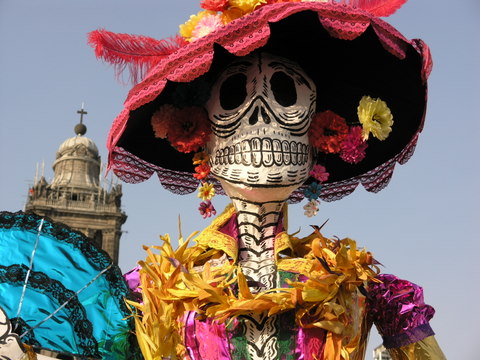
    Día de Muertos, Mexico

In my opinion, probably one of the most interesting festivals, Dia de Muertos (or Day of the Dead as its most commonly called) is a two-day celebration of the reunion of relatives to their dear departed. The event includes skeletons on stilts, parties in cemeteries, skull-shaped lollies, and mariachi bands playing next to graves. Despite it's kookiness, don't expect a Halloween-style party. The 'Day Of The Dead' manages to smash the taboo of crossing over to the unknown. It celebrates the continuation of life beyond, and the special bond between loved ones. 


Tuesday, 18 September 2012

The Art Of Tea Drinking


After a recent trip to Sarajevo, we decided to have a tour with a local guide to get to know more of the city. Expecting him to talk mainly about the Bosnian war, we were surprised when the majority of the trip was spent discussing, well tea! Yes, as in the drinkable kind. When it came to discussing the hot beverage, our guide became quite animated. There are rules, he said. In Sarajevo a person can't simply pour tea into a cup and start drinking. There certain steps which must be followed. This was the same for coffee too. But even more so. At the mention of coffee, our guide began a 20 minute talk on the dos and don'ts of coffee drinking.
It really got me thinking. As a Brit I cherish my cup of tea in the morning. But that's understandable isn't it? I'm English. That's what the English like. However, tea holds a distinct place in many cultures, with multiple customs and rituals for drinking it. After all, tea was first drunk by the Chinese before it traveled to Europe right? 

Here are a few of the tea rituals which are  performed across the globe:

Turkey
Tea drinking has never been taken more seriously than it is here.  With the highest consumption in the world, Turkish tea is always a rasping orange colour, and taken without milk. It is common practice to dip cubes of sugar in the liquid before sucking on them. The tea here is especially beautiful, with curved-shaped and clear glasses with elaborately decorated saucers. 

India
It is considered impolite to accept a cup of tea when it is first offered to you. Only when the host insists, should you gracefully accept. God that takes up a lot of time!

China
In this country you should thank your tea server by gently tapping on the table twice with your index and middle fingers.

Tibet
Tea is commonly brewed with salt and butter. Very strange. 

Japan
You may add milk and sugar to your tea, but only once you have tasted it the way it has been served to you. Failing to do this is seen as a major insult to your host. 

Morocco
Atai (Moroccan tea culture) is defined by the way green tea is prepared and consumed in Morocco. When drinking tea, a person must not talk about business or serious matters, but instead keep it social. So when drinking tea with a shopkeeper, don't talk prices until the glasses are empty.

Argentina
Don't use the straw to stir mate (tea). The leaves floating on the top should remain dry. 

Russia
Tea is considered the national drink here and is drunk out of glasses.

England
Now this one made me laugh. After stirring, place your spoon on the saucer behind the cup, its handle pointing the same way as the cup's. This may have been true a hundred years ago, but now the times have changed. Tea drinking is so common in households that it has just merged into every day life. Now all you have to do is pop the kettle on and grab a teabag, (and maybe a chocolate biscuit) and voila! Your brew is served! 

Now I might go make myself a cuppa...


The Real-Life Robinson Crusoe

All I can say is that I want to be this man. What a life, eh? The 86-year-old English man, Brendon Grimshaw has lived alone for years on the tiny island of Moyenne in the Seychelles. He has managed to create his own paradise when he bought the island in 1962 for £8000. Yes £8000. That's less than a fancy car.

However, while he may own a piece of palm tree'd paradise that many merely dream about, his days are far from filled with cocktail sipping and sunbathing relaxation. Instead, the Yorkshire man has spent the years reintroducing the indigenous giant tortoise to Moyenne, and now shares his home with 120 of them. It has now become on of the world's smallest national parks.

What a guy. Not only does he live in paradise, but he also spends his time doing something worth while, and giving something back. Isn't that the ultimate goal, and what we all want in life?

All I know is I want his phone number. Can I be Friday?

Monday, 17 September 2012

Bob Marley: 10 Things You Don't Know About Him


Now, I'd be the first to stand up and declare my love of Bob Marley's music. His laid back and soulful tunes are the perfect potion for banishing the blues. His Rastafarian lyrics have symbolized hippy values for years, and continue to hold meaning for many. After all, he remains the ultimate hippy. His songs continue to spread the message of all things tree-huggers love. It's all about peace man! And love and unity, right?
Well yes of course, and that's why we love his music. He wouldn't be the same Bob otherwise. However, as I often declare to be Bob's number one fan, it's sometimes nice to look beyond, and see the man behind the music. While he will always remain as one of the world's greatest hippies, after years of obsessive reading on my behalf, I have discovered that he was also a pretty interesting man, who led a pretty interesting life. Here are ten facts that you probably didn't know about him (and yes I realize I do come across as a bit of a stalker, but I'm not Eminem's 'Stan' I promise): 

  1. Bob's father was a 50 year old white British naval captain called Norval Sinclair Marley. Bob's mum was a 19 year old black village girl named Cedella. Imagine the uproar THAT caused in both families. 
  2. 'Tuff Gong', the name of Bob's record label, was the nickname Bob earned for himself in the Kingston ghetto of Trenchtown for being the wrong kind of guy to mess with.
  3. Bob was twenty-one when he married the Trenchtown Sunday school teacher named Rita. Despite having countless affairs and numerous children with different women, he remained married to this Trenchtown beauty right up to his death
  4. Football remained his great passion after music, and Bob was able to play to a professional level. His love for it was so strong that the fatal cancer which would end his life, emerged from a foot injury that had resulted from a game of football. 
  5. Bob was never bitter though. When he died, a football was placed within his coffin
  6. As a little kid, Bob had a spooky knack of successfully predicting the future of people by reading their palm. Many have stated he even predicted his own future, and declared he would die at the age of 36. He did. 
  7. Of course, he was a devout Rastafarian. Ras Tafari is the name of a man who was crowned King of Ethiopia in 1930.  
  8. He was a massive flirt. In the end Bob had 13 children by 9 different women. Its even be said he had three children born in four weeks by three different women. (Bloody hell)
  9. Bob's ska band 'The Wailers' were originally called 'The Teenagers'. 
  10. And lastly, nobody really knows what the word 'reggae' means, or where it originated. 

Sunday, 9 September 2012

Tiger Hills


Set in the beautiful region of Coorg in the south of India, Tiger Hills, the first novel by Sarita Mandanna presents us with the traditional love triangle. A heroine finds herself torn between two suitors: the debonair bad boy and the dependable childhood friend. Set at the turn of the twentieth century, this atmospheric novel follows the life of a girl named Devi, a girl so determined that at the age of 10 she declares that she will not marry anyone but Machaiah, a famed local tiger hunter. To the reader’s dismay, she has no idea that her lifelong friend, the shy and reserved Devanna, harbours his own secret hopes of their union.
Despite this romantic entanglement, Mandanna’s novel is more than a love story. Her multi-generational tale explores the danger of passion, the power of memory and the sadness of thwarted love. As children, Devi and Devanna are practically inseparable and together they attend a missionary school run by a German priest. However, things start to change when Devanna’s intelligence is recognised and after private tutoring, he leaves the village for Bangalore Medical College. From this point, everything shifts as a series of catastrophic events unfold that will change the lives of the characters forever. Following both Devanna's traumatic experiences at college and Devi's blossoming relationship with the man with whom she has been consumed since childhood, the book follows their lives apart and together.
Of all the characters, romantic, tortured and ambitious Devanna captures the heart of the reader the most. Mandanna carefully articulates the psychological breakdown that leads him to the violence and regret that he suffers from for the rest of his life.
Alongside its epic narrative, the book also gives us an insight into the life in the region and its superstitions, food, festivals, local customs and folklore. Mandanna explores the changing political climate in India during the turn of the 20th century, charting its struggle for independence, both world wars and the effects of colonisation. She particularly brings to life Coorg itself; the European settlers, coffee plantations and clans, creating a portrait of a far-away land during 60 years of social upheaval.
The language is lyrical and evocative; this book is a perfect read for someone interested in India, its people, culture and history. The tale ends with Devanna's thoughts: ‘There was so much left to say,' leaving the reader to feel the impact of all that he has lost. It’s a perfect story for someone who wants a taste of Indian culture while reading about loss, suffering, love, forgiveness and human experience.

Friday, 7 September 2012

Trinidad and Tobago: Two Islands, Two Unique Experiences


Heralded as the true Caribbean, Trinidad and Tobago offers great value, beauty and a genuinely friendly culture. Sighted by the explorer Christopher Columbus in 1498, it is one of the wealthiest nations in the Caribbean due to its large reserves of oil and gas. Music, colour, culture and ethnicity unite the dual nation. Though many have hailed it as the ultimate carnival destination, there is much more to Trinidad and Tobago then a good party. Mesmerizing beaches and coral wonderlands cover its coast while luxuriant rainforests are perfect for hiking and bird watching.
Carnival celebrations are notorious on the larger island of Trinidad, with calypso music and steel drum bands reigning supreme. The Port of Spain is especially the place to go for a party. Soca music plays in the street, while women covered in bright feathers and beads gyrate to the music. Crazy steel-pan players can be found everywhere, proving a testament to the island’s love of music. As an island of colours, Trinidad is where you will find the party-loving carnival fans. However, don’t get me wrong – there is much more to be seen in Trinidad than what you see through the customary beer goggles. The island also has a rich array of natural wonders that invite bird watchers and hikers alike. It is home to hiking trails which lead you to cascading waterfalls and deserted lagoons, and the coast is home to untouched, rugged beaches. However, it is ultimately the Port of Spain and its carnivals which has become something of a legend on this island and is definitely worth a visit.
On my own visit to the island I experienced Trinidad’s carnival and fun-loving nature. My tour guide gleefully explained to us the absence of wildlife: ‘as you can see there is no wildlife here in this forest. That is because we have eaten them all!’ This statement simply epitomizes the Trinidadian’s laidback and hedonistic outlook on life. While she may have been joking, Trinidad and Tobago seem to have a rich cuisine with an array of food sources; while I visited I was persuaded to try a shark burger, which in all honesty did taste like chicken... I’m not even joking.
Home of carnival, calypso and limbo dancing, this little nation packs a punch in diversity. Trinidadians are relaxed and integrate tourists in a natural way, making it clear that the tourist industry is not just what the nation is about. They specialise in liming (talking for talking’s sake). They are masters in all of life’s pleasures; dancing, partying, playing cricket and simply relaxing. Trinidad is definitely worth a visit for cricket fans as it boasts a good team and cricketers such as Brian Lara.
On the other hand, the quieter island of Tobago is the perfect destination for diving enthusiasts and nature lovers. It is peaceful and relaxed in comparison to its lively and densely populated neighbour. While Trinidad booms and party’s all day and night, the tiny island of Tobago (just 42 km across) bathes in the sun,pina colada
 in hand, with the picturesque view of its pristine beaches. It’s an island that should be proud of its rainforests, nature reserves and fantastic dive sites, and yet it seems perfectly content away from the tourist limelight. This is what makes it special. For someone who wants to experience the tropical beauty of the Caribbean without feeling like they are in the backdrop of Billy Ocean’s ‘Caribbean Queen’, Tobago is the perfect escape. While the island accepts tourists, it also allows them room to breathe and choose how to make the most of the tropical paradise; from laughing with the locals at an open-air bar, living bare feet in tiny guesthouses to experiencing luxury at the postcard perfect plush resorts. However, it seems sleepy Tobago is being woken up by the tourist industry of late so I’d suggest not to hesitate in visiting if you’re interested.

The islands are so diverse that on Trinidad you may also come across flamboyant temples or smell the rich aroma of curry, as you see how East Indian culture has been absorbed in the Caribbean. The two-island state is inhabited by mostly African and Indian descent. Whether you decide to visit sleepy Tobago or vivacious Trinidad, or both, you are guaranteed to experience the Trini way of life. Due to the booming oil and gas industry, Trinidadians tend to treat tourist in a blasé manner, which in a way creates more of an adventure away from the traditional tourist trappings.
For those who are looking for a taste of Caribbean partying and want to experience calypso dancing and colourful carnivals Trinidad is the place to be. For those who are looking to escape to a tropical paradise away from the tourist stereotypes, Tobago with its idyllic rainforests and untouched beaches is the perfect escape. Of course, for those who like a bit of both, why not combine both islands for a true Caribbean experience?

Thursday, 6 September 2012

Marley


It is more than 30 years since Reggae legend Bob Marley died, yet his songs such as One LoveBuffalo Soldier and No Woman No Cry continue to sell, seen by many as anthems of love and peace. There have been numerous documentaries and autobiographies of the Jamaican singer-songwriter over the years, but a new film directed by Kevin Macdonald and executive-produced by Ziggy Marley and Island Records founder Chris Blackwell seems to be the first true act of homage to the Rastafarian star and musical hero.
The premiere was held in Emancipation Park, Kingston, Jamaica on 19th April 2012. Admission was free: a gift to the people of Jamaica from Marley’s family. Thousands of locals arrived to celebrate the nation’s hero, and a red, green and gold carpet was laid out (but then quickly replaced as it was deemed sacrilegious to walk over the colours of the Rastafari). The premiere of the film was timed to coincide with the preparation of Jamaica’s 50 years of independence celebrations, highlighting exactly what one small nation achieve.
This respectful film oozes warmth as the testimony Macdonald receives from Marley’s friends, family and fellow band members provides curious insight. All in all, the film gives a vivid picture of a man who rose from poor beginnings in Trench Town to become an international legend. The imagery within the film is colourful and fantastic, with Macdonald showing some wonderful still photographs of the Wailers on tour. Moreover, while Macdonald tells a compelling story of the life of Marley, the singer is placed at the centre of a larger narrative – the story of Jamaica itself and its struggle against gangsterism and crime.
It is not the people we come to play... We come to play music.
Bob Marley
Marley was born the son of a white man who disappeared soon after. His mother, Cedella Booker, was an Afro-Jamaican who brought up Bob on her own. Many have stated that Marley’s mixed-race background gave him an outsider’s edge and a passion to get ahead. This, mixed with his private pain, created great music. His first single, recorded when he was just 16 years old, was Judge Not: "I know that I'm not perfect/ And that I don't claim to be/ So before you point your fingers/ Be sure your hands are clean”, highlights the singer’s emotional intensity, even at such a young age.
Marley emerges from this film as a passionate supporter of peace, yet reluctant to be associated with politicians. Macdonald includes the famous moment at a free concert when Bob dragged the socialist Michael Manley on stage to shake hands publicly with the conservative leader Edward Seaga; a moment which defines Marley’s strife for peace. Furthermore, the director includes other moments in Jamaican history, such as the hysteria caused by the arrival of Emperor Haile Selassie in 1966, to the public mourning of Marley’s death in 1981. "He was a hero for Jamaica," said one fan, who attended Thursday's screening. "The film shows that." Another fan said "It showed what a positive effect he had on the country".
What is so interesting about this film is how it manages to celebrate how Marley is perceived as an icon of peace, while also depicting a much more in-depth and political mind. Indeed, stereotype often paints Marley and Jamaica as dreamy, sunny and laidback; the film instead highlights Marley as a driven, competitive and charismatic leader, who, while being political, was never boxed in by politics. Macdonald suggests that Bob Marley was increasingly loved due to his surviving idealism and charismatic innocence of the world. Cindy Breakspeare, a former Miss World and mother of Damian Marley, said the film was an emotional journey. "We miss him so much," she said. "The whole world does."
All in all, Marley is a very personal and intimate film, gifting the world with an authentic portrait of a singer-songwriter from the slums of Trench Town, and as the credits rolled, the opening bars of Get Up, Stand Up echoed through the Park, bringing the audience to their feet. As Chris Blackwell, the founder of Island Records states, “You learn about this man whose music you hear everywhere, you learn how he started the difficult life he had and how he treated people, his generosity of spirit, just about the man in general”. The Marley name now stretches beyond music. It has become a global brand, used to sell diverse products such as clothing and headphones, and to promote the Rastafarian ideal of peace. So, this film may be the beginning of a wider knowledge of Bob, as a man as well as a musician. “The film doesn’t commodity Marley,” says Macdonald. “It does the reverse…it strips away the poster image, the t-shirt image and says, ‘Who was Bob Marley?”

Wednesday, 5 September 2012

How to Choose a Caribbean Island


The Caribbean is extremely diverse with many nationalities, languages and cultures. Many make the mistake of believing pristine beaches, reggae music and cocktails are what epitomize the many islands of the Caribbean, but there is more to these islands then white sand and turquoise waters, with each island celebrating its own unique way of life. For anyone who is interested in visiting the paradise islands (and I highly recommend that you do!) it is best to make sure you pick the island which best ‘fits’ you.

For Diving Enthusiasts:


Bonaire

A government-protected Marine Park ensures that diving in Bonaire is Caribbean diving as it should be – untouched and unspoiled. This means that Bonaire is renowned for its pristine reefs and diverse marine life. For those visiting, it is definitely worthwhile to scuba dive or snorkel and experience the island’s inviting warm water (78 to 84 F all year round) and unsurpassed visibility.

Cayman Islands

The three islands of the Caymans are often considered the birthplace of recreational diving in the Caribbean. The three islands are essentially an exposed top of an underwater mountain which provides extraordinary diving locations. The intense variety of marine life, historic shipwrecks, still, warm waters and 100-feet-plus visibility means it is difficult to find a better diving location in the region. After visiting, I would highly recommend taking a tour of 'Sting Ray City' – where you will come face to face with wild stingrays and even feed them as you snorkel.

Virgin Gorda, British Virgin Islands

The resting place of HMS Rhone, which sank in 1867 off Salt Island near Virgin Gorda, has become one of the most glorious dive sites in the world. Schools of tropical fish swim by the spectacular coral and sponges and for the more adventurous divers an exhaustive selection of caves, reefs and pools are guaranteed to quench their thirst of underwater exploration.

For Beach Lovers:


While the Caribbean boasts a lot more than exotic beaches, there is a reason why people picture white sand, turquoise waters and palm trees – with the exception of Saba (which has rocky shores) and Dominica (where the few beaches have dramatic black sand which absorb the sun; be careful of blisters!). Wherever you go in the area, the shorelines will not disappoint. Here are a few which, in my opinion, stand out from the crowd.

Antigua

Legend has it that there is a beach here for every day of the year. Most major hotels open directly onto a good beach, so you can't miss the stunning shore. However, Antiguans claim their two best are Dickenson Bay, in the northwest, and Half Moon Bay, which stretches a mile along the eastern coast.

Palm Beach (Aruba)

This famous beach is what, some argue, put Aruba on the tourist map. Certainly, many publications have hailed it as one of the best beaches in the world. However, be careful as it inevitably does tend to get crowded.

The Gold Coast (Barbados)

Also called the Platinum Coast, some of the finest beaches in the Caribbean lie along the coast of Barbados. Certain beaches open to the public which are popular include Paradise Beach and Brighton Beach. You will also find here some of the swankiest and deluxe hotels in the Caribbean.

For Party Animals:


While night-time is simply sleep time for a majority of the island, there a few jewels which boast an extremely diverse and fun-filled nightlife that will not disappoint.

Trinidad

The home of carnival, the vivacious island of Trinidad boasts one of the loudest music scenes in the Caribbean. The Port of Spain especially is known for its calypso music and steel drum bands. Head here to witness for yourself the dazzling and glittering female dancers who take part in the carnival festivities.

Puerto Rico

Puerto Rico contains all the ingredients for a great party, including bars and taverns, casinos, dance clubs which often feature a diverse range of music from western imports to salsa and meringue, and cabaret shows filled with feather-clad and glittering girls. This is definitely the place for the more hardcore who wish to stay up all night and nurse their Bacardi hangovers the next day on the beaches.

Curacao

Known as one of the Caribbean’s hotspots for gamblers, Curacao is known for its casinos. Salinja, situated in Willemstad, has lively bars where locals and tourists mingle and drink until the early hours of the morning, while live jazz often fills the air.

For Nature Lovers:


The Pitons, St. Lucia

One of the most iconic vistas throughout the entire Caribbean, the twin volcanic Pitons rise dramatically from the sea and can both be seen by a bus tour or alternatively, a boat tour. The Pitons management area, a UNESCO World Heritage site, includes tropical forests, coral reefs, waterfalls and hot springs. For the more adventurous you can take the challenge of hiking to the top of the 2,619 foot Gros Piton.

The Baths, Virgin Gorda, British Virgin Islands

Along the coast of Virgin Gorda there are a jumble of ancient underwater boulders that form a series of caves, pools and grottos. The calm and sheltered waters mean that even the most novice snorkeler can experience this magnificent natural wonder of rock formations.

El Yunque Rain Forest, Puerto Rico

The Caribbean’s most famous rainforest, its 28,000 acres include staggering biodiversity – home to thousands of plants and hundreds of animal species. The park can often feel overwhelmed with visitors but quieter experiences can be had. For those who truly want to immerse themselves in the rainforest experience, hiking, fishing and camping are also available.

For Explorers:


Saba

For the more adventurous types who wish to travel a little off the beaten track, the island of Saba offers a unique and hidden experience. Saba is known as ‘The Unspoiled Queen’ and is accessible from St. Martin via a fifteen minute plane ride or an hour and a half ferry ride. Saba does not have the sandy beaches which have made the Caribbean famous; instead, it’s a volcanic island with cliff faces and rocky shores. There are four small villages on the island meaning Saba really does allow you to escape from the many tourist trappings of the area.

Jamaica

Music is the heartbeat of Jamaica, and this is, of course, the birthplace of reggae and its most famous star Bob Marley. Avid fans can tour the places most significant in his life. Visit Gee Jam in Port Antonio, the ultimate base for aspiring musicians and get some studio time yourself. Alternatively, visit the colourful childhood home of Marley in Nine Mile, in the rural heart of Jamaica. The singer lived here until he was 13 and it includes the inspirational stone where he supposedly sat upon to meditate. For avid fans of reggae it is worth a visit to Studio 1 and the famous dancehalls of Kingston.

Wherever you decide to go the Caribbean offers a unique range of travel delights from picturesque beaches and dive sites to colourful carnivals and pulsing dancehalls. Whether you decide to indulge in the Caribbean stereotype, pina colada in hand, or decide to venture further afield for a truly shipwrecked experience, I am sure the Caribbean will never disappoint.

A monks life: An entirely different Thai experience


Thailand is known by many as ‘The Land of Yellow Robes’, due to the sea of yellow-clad Buddhist monks who walk its streets. For centuries, Buddhism has upheld its place in Thailand and enriched the way of life of its people. According to the 1960 census, the population of Thailand numbers 25,519,965, and of this number 94% are Buddhist. It is no surprise therefore, that when I arrived at the backpacker capital, eighteen, fresh faced and ready to party, I was confronted with an unexpected insight into a spiritual way of living – and yes, it was definitely unexpected. As part of a group of twenty travellers, following an itinerary arranged through the organisation Real Gap, we were expecting what any typical young traveller to Thailand expects: Khao San road, Singha beer and full moon parties.

Instead, we found ourselves transported 130km west of Bangkok, just outside of the town of Kanchanaburi. Here, we were abruptly dropped off in (what looked like) the middle of nowhere. Our tour operator hastily informed us that we were to stay with a community of monks for a night to begin our month long tour.
The monks made it clear they wanted to show us what a typical day was like for them. Firstly, we had to assist with the daily chore of cleaning. While most of us groaned at this, each of us soon had a rake and immersed ourselves in the task. This was soon followed by a tour of the grounds and the monks' individual homes. Each home is essentially a small wooden hut that would only fit one grown man to sleep in with no furniture, just a bare floor. While their simplicity shocked us, the washing (mainly orange robes) draped along the roofs highlighted how they were indeed, ‘homes’ to the monks.To be brutally honest, as a group of young people, mostly straight out of sixth form, the dishevelled buildings, eerie silence and the multitude of stray dogs filled us with apprehension. It was certainly a long way from our ‘backpacker dream’. After being shown to our rooms (bare cells with concrete floors) and given our attire for the day (white cotton pyjamas), we were introduced to the four monks with whom we were to share this experience. Following the hysterics brought on by seeing our beds for the night and our very unflattering uniforms; meeting these four men brought a little light to the situation. Their soft manner and way of addressing you without looking directly at you, created a sense of both calm and intrigue amongst the group. We could not help but stare at them, which we later found out was extremely disrespectful in Buddhist culture.
The rest of the day consisted of ‘spiritual’ activity. We were taught to chant, all walking in a circle and later, finally shown how to actually meditate. Although most of us giggled at first, the monks were unsurprisingly patient, and an hour in I finally began to find myself in a state of relaxation (that is, until a small lizard crawled up my back). We went to our concrete beds that night after a small dinner of rice and vegetables, which the monks watched us eat (their faith dictates that they do not eat past noon), accompaned by the terrifying sounds of stray dogs. Despite having what was certainly the worst sleep I have ever had, I was quite glad for it, as the day had provided me with a lot to think about.
The following morning, we were awake at 5am for the morning chants and then accompanied the monks on a walk around the nearby village, where locals handed them food. For most of us this was the highlight of our stay. Watching local villagers gracefully sharing their food with the monks was a very special moment. We were then touched to find the monks giving it straight to us to have for our breakfast!
By the time it was our moment to leave, we found ourselves taking off our white pyjamas, a little saddened to be going. We had found friendship in these four gentle monks and were willing to sleep (or not sleep) on concrete floors if it meant we could stay an extra day. While we didn’t leave as entirely new people, it certainly changed many of us in a small way, and was an experience that would stay with us. Our rash and hedonistic post-school selves had learned that the sense of community, respect and self-discipline which Buddhism teaches are important values – and I’m glad I was given the opportunity to realise this at the age of eighteen.